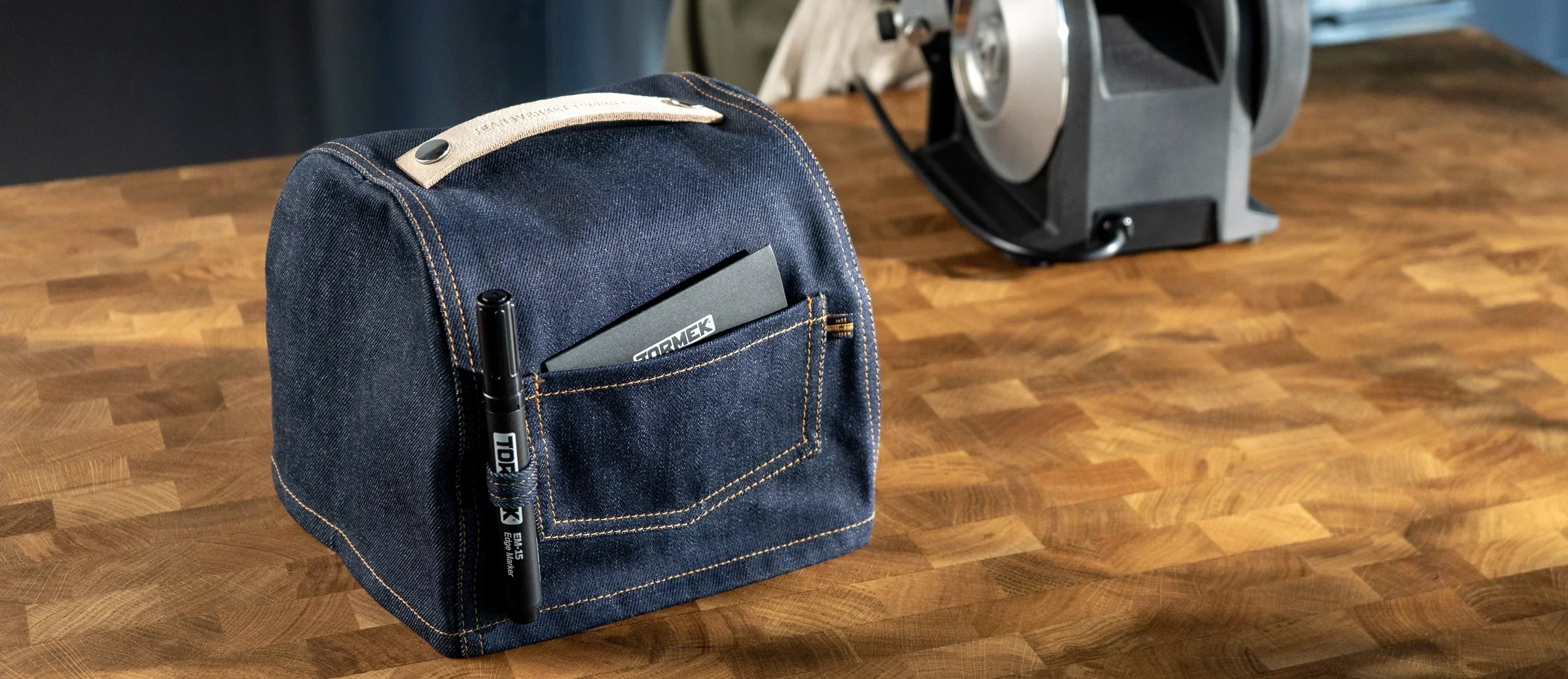
The Tormek T-2 Pro Kitchen Knife Sharpener can make all your kitchen knives sharper than new in no time. But did you know that the SC-60 Scissors Jig allows you to also sharpen virtually any pair of scissors you might find? The jig is designed to give controlled, consistent results on your kitchen scissors, quick and easy. This guide walks you through setup, technique, and practical considerations so chefs and kitchen staff can restore clean, precise scissor edges with minimal effort.
Why the SC-60 Scissors Jig?
Unlike freehand sharpening, the SC-60 Scissors Jig holds the scissor blade at a fixed angle and stabilizes the sharpening process. On the Tormek T-2, which is already designed and engineered for professional kitchen environments, this gives you:
- Repeatable edge geometry
- Minimal steel removal
- Clean, sharp results
- Always sharp scissors, without them ever leaving the kitchen.
Step 1 – Prepare the Scissors
Make sure the scissors are dry, clean, and free from food residue or grease. You can sharpen scissors with a blade length up to 120 mm / 4.7 " (measured from the pivot point to the tip). Longer scissors need to be disassembled, allowing each blade to be sharpened separately.
Step 2 – Mount the SC-60 Scissors Jig and Set the Angle
- Remove the angle guide for knife sharpening
- Mount the base plate of the SC-60 Scissors Jig on the arm where the angle guide for knives usually sits.
- Set the angle to 60° by matching the curve on the back of the clamp to the periphery of the grinding wheel and the angled side of the clamp to the base plate, or,
- Repeat the existing angle with the Tormek marker method: mount the scissor blade in the clamp. Color the bevel with the EM-15 Edge Marker and place the clamp on the base plate with the bevel resting on the grinding wheel. Turn the grinding wheel by hand and check where on the bevel the color is rubbed off. Adjust the base plate until the color disappears over the entire width of the bevel. The angle is now correct and it's time to start sharpening!
TIP: Results matter more than chasing a specific number – match the existing bevel unless the scissors are extremely worn.
Step 3 – Sharpening
Now it’s time to start sharpening. First step is to turn on the machine, then you can start:
- Work from heel to tip in one controlled motion with very light pressure on the grinding wheel and follow the shape of the blade.
- Repeat two to four passes, checking the bevel between strokes.
- You know you are finished when you have raised a burr on the opposite side of the sharpened bevel, all along the blade. Then repeat the process for the other blade. Note that the burr on a scissor is generally less prominent than on a knife due to the large sharpening angle, so feel carefully for the burr so you don’t remove excessive amounts of steel.
Scissors generally only need little material removal if they are not really abused. The DWF-200 Diamond Wheel Fine included with your Tormek T-2 is ideal for this. For really abused scissors, we’d recommend the DWC-200 Diamond Wheel Coarse.
Step 4 – DON’T Deburr!
Once you feel a consistent burr along the entire edge on both blades, you are done sharpening. If you have disassembled the scissors, you can now reassemble it. What differs from sharpening a knife is that you don’t want to deburr or polish kitchen scissors.
Instead, open the scissors completely while slightly pushing the blades apart. Then, push the blades together while closing the scissors. This will provide all deburring needed, and you will have sharp scissors that grip the material being cut extraordinarily well.
Step 5 – Test the Edge
Cut through:
- Kitchen twine
- Herbs
- Parchment paper
Smooth, controlled cutting with no snagging or slippage means the job is done. If the cut snags or slips, repeat two light passes per side. If the parchment paper folds between the blades there might be a gap that needs to be addressed. Usually there will be a screw in the pivot point that you can tighten and close the gap.
Practical Notes for Professional Kitchens
- The Tormek T-2 runs cool at a low rpm, preventing temper loss on the steel.
- Only light pressure is necessary – the diamond wheel does the work, and too much pressure can instead damage the diamond wheel.
- The SC-60 Scissors Jig is suitable for both right-handed and many left-handed scissor designs. Left-handed scissors need to be able to be disassembled to sharpen each blade separately.
- Regular maintenance sharpening takes seconds. Do a full resharpen only when absolutely needed.
Are you ready to get those useless scissors sharp again? Order your SC-60 Scissors Jig online.